
There’s a small, circular table in the middle of my Brooklyn garden that was in full sun throughout the summer. In late October I noticed it was shaded for a short period during mid-day. I realized that this was because there is a large Norway maple (a topic for another newsletter) in the backyard three houses to the south. The sun was low enough in the sky that it dipped behind the tree for a short period, a pattern I hadn’t seen in past years. Maybe because I didn’t look out the window at that time, or maybe the tree wasn’t as tall. Now, as we head toward the shortest day of the year, that table is in dappled shade around noon as the sun shines through the remaining leaves on the maple and then casts a long shadow into the garden bed as the sun moves to the west.
Noticing these subtle shifts in environmental conditions and the changes that occur over time is what makes gardening an expansive and grounding practice. It encourages us to recognize that we occupy a specific location on this planet as it rotates on a tilted access while simultaneously orbiting the sun. When we take time to observe how the sun travels through the sky and how that differs across the seasons we can develop a greater connection to our gardens and the natural world as a whole.
Most of us are aware that sunlight is a primary factor in gardening. I learned about photosynthesis in elementary school, but I don’t think I appreciated the complexity of the relationship between sunlight and plant growth, health and behavior. Understanding the way that plants adapt so that they can capture enough sunlight and use that sunlight to make their own food is not only fascinating, but makes us better gardeners.
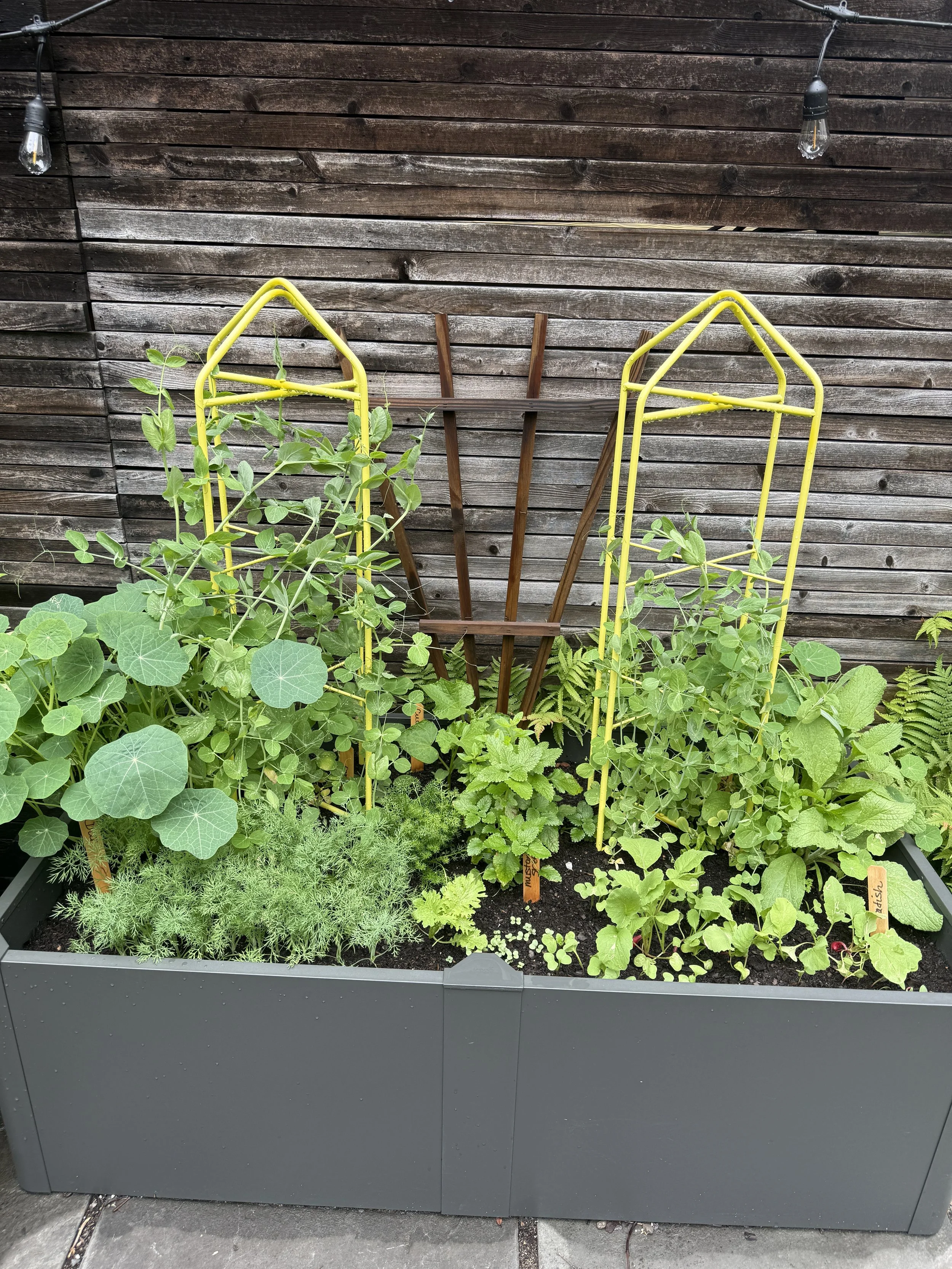
Those of us who garden in urban areas often deal with particularly extreme sunlight conditions. We’re gardening on rooftops with prolonged hours of sun daily, in gardens that are tucked in between buildings and thus primarily in shade, or on balconies with intense sun for short periods of time. Just as I’ve recognized the pattern of light on my table, I continue to notice the ways in which sunlight impacts the plants in my garden, sometimes in surprising and nuanced ways. For example, I grew peas last spring for the first time. The raised bed is only 4 1/2 feet wide, but the pea plants on the left grew more quickly, producing larger leaves and more pea pods. Same soil, same seeds but different outcome. I can only attribute the differences to the duration and quality of light these plants received.
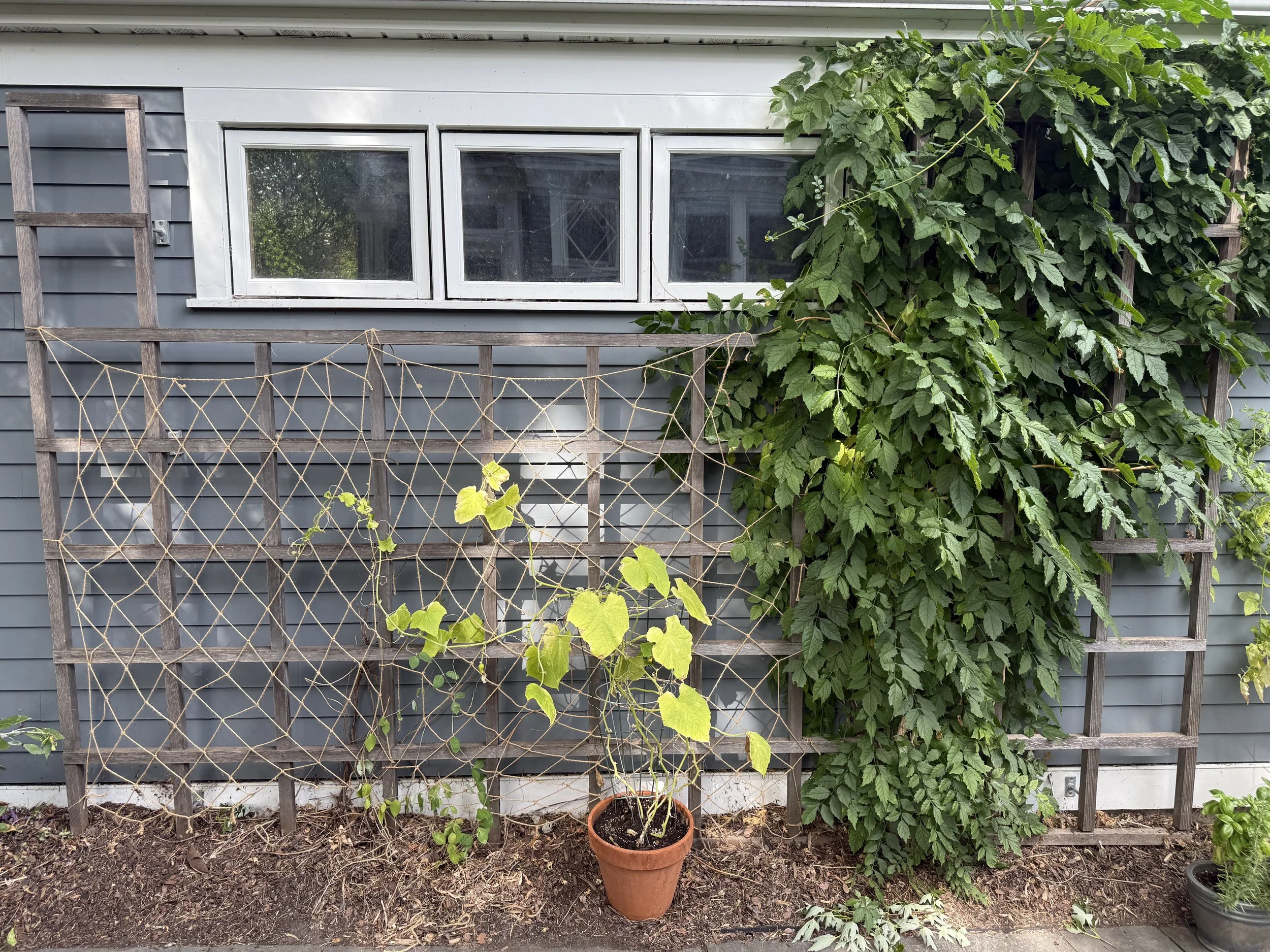
One of the first things I’ll often do with my clients is to assess the sunlight in the area (or areas) they’d like to focus on. Most of them are aware of the importance of sun exposure when selecting plants, but there’s often wishful thinking about how much sun their garden receives (“full sun” is 6+ hours of direct sunlight). Also, they’re sometimes unsure about what partial sun or partial shade means. I give them an assignment to take photos of their garden spaces at different times of day during the growing season and then we analyze, assessing where the sunlight falls and the quality of the light.
Yes, this exercise is in service of having a more successful and beautiful garden. Identifying sunlight conditions accurately is instrumental in determining which plants will thrive. But I also hope this process helps my clients to cultivate a habit of close observation and awareness, not only in their gardens, but as they move through the world.
I wish the same for you — even at this time of year when we have fewer hours of sunlight and it carries less strength — may noticing the rays of light and the plants they support bring you a sense of comfort and wonder.