
June 22-28 is Pollinator Week
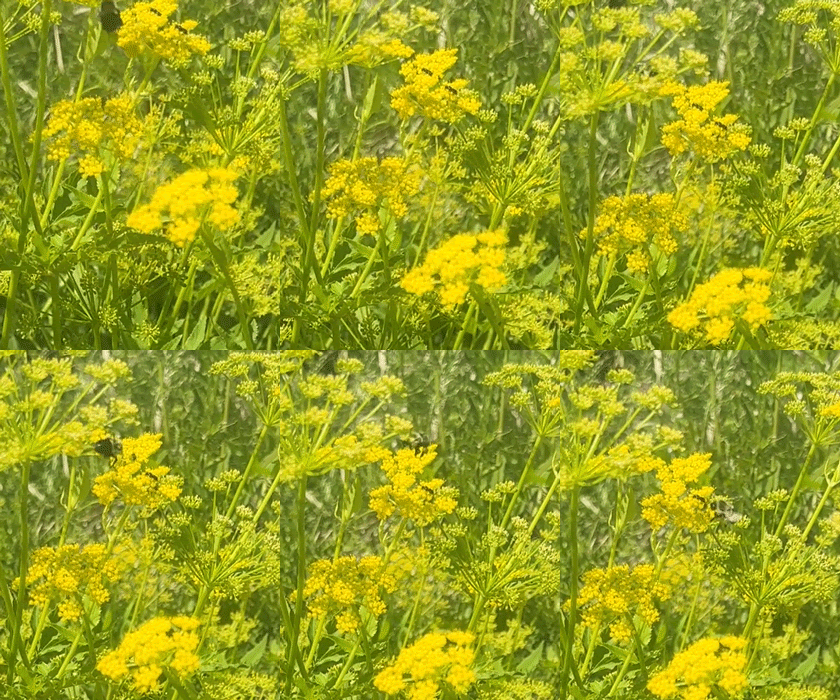
Why should we care about pollinators?
A world without butterflies, bees, birds and other pollinators would be a world without much of the food we eat and most of our flowers. “About 80% of all flowering plants and over three-quarters of the staple crop plants that feed humankind rely on animal pollinators”. Did you know that without pollinators we wouldn’t have chocolate? In addition, plants that rely on pollinators for reproduction play a pivotal role in cleaning the air and purifying water. Yes we love to see butterflies and hummingbirds, but, more importantly they perform a vital job for life on our planet. How can we not care?
What can we do to support pollinators?
1. Provide habitat. Plants, especially native plants, provide necessary food and shelter for bees, butterflies, beetles and other pollinators. While some pollinators are generalists (they can visit a large variety of plant species for pollen), others are specialists, requiring specific plant species. Note that many hybrids and cultivars can’t be used by pollinators because of changes to the bloom shape, color or scent.
Wondering which plants are native to your region? This tool allows you to search by zip code and also order plants.
Think you don’t live in the right place or have a large enough outdoor area to make a difference? Studies have shown large native bee populations in major urban areas. Even native plants in containers will support pollinators.
2. Rethink how we care for plants. Traditional gardening has largely been in service of humans with an emphasis on beauty. With aesthetics as the goal, gardeners often reach for a spray to prevent insect “damage” (the home and garden pesticide market is projected to reach almost 13 billion by 2030). When we view insects as “pests” and use insecticides, we’re not only killing the intended insect, but impacting other insects, the birds that eat them, our waterways, and our own health and the health of our pets.
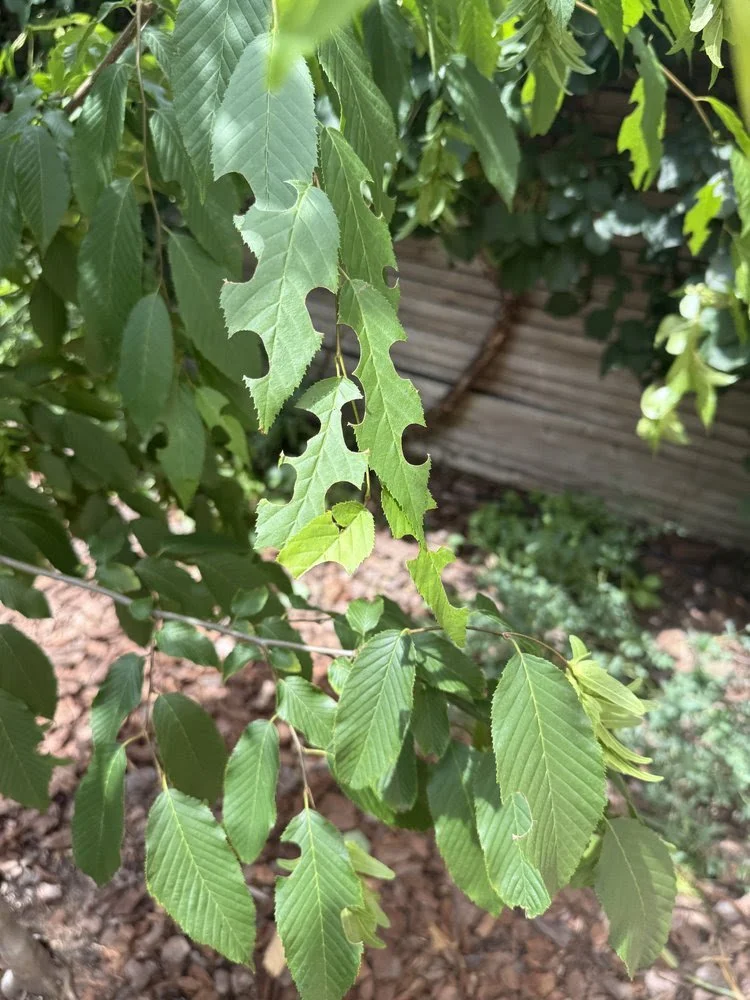
So when we see evidence that an insect has made use of a plant, as I did recently with my American hornbeam, rather than dismay, perhaps we can respond with curiosity. I consulted a few friends who are expert gardeners (shout out to Marisa and Gavin) who informed me that the circular holes in the leaves are likely from a Leafcutter bee (family Megachilidae).
Female Leafcutter bees use the circular pieces of leaves to create cylindrical cells, one cocoon for each larva. The holes don’t harm the plant and Leafcutter bees are excellent pollinators so I didn’t need to take any action. (Watch this video to see these bees in action. BTW, I think they’re adorable. My husband and son disagree).
3. Learn more and spread the word. Learn about pollinators and find local Pollinator Week events on the Pollinator Partnership website. Entomologist, ecologist and conservationist, Doug Tallamy, is another great resource if you want to dive deeper into these topics.
Feel free to share this with anyone you think would be interested. I’m passionate about helping people learn and make an impact.
Happy Pollinator Week!